


The ecology of the estuary
The Tagus Estuary is one of the largest in Western Europe; it spans over 325 square kilometers and the intertidal zones account for more than 40% of the total. On average, it has a relatively shallow depth of 10 meters and the tidal flow is much greater than that of the River Tagus.
It is a highly productive environment for plants and animals, and the vast stretches of mud provide habitat for a variety of living organisms that are basis for food chains. It also serves as a 'nursery' and fish farm for a variety of fish species, as well as refuge, food, and nesting grounds for numerous birds.
-
The Tagus Estuary Nature Reserve (RNET), located north of Alcochete, is the largest wetland in Portugal and one of the ten most important ones in Europe. This status was given to protect the migratory water birds that come here.
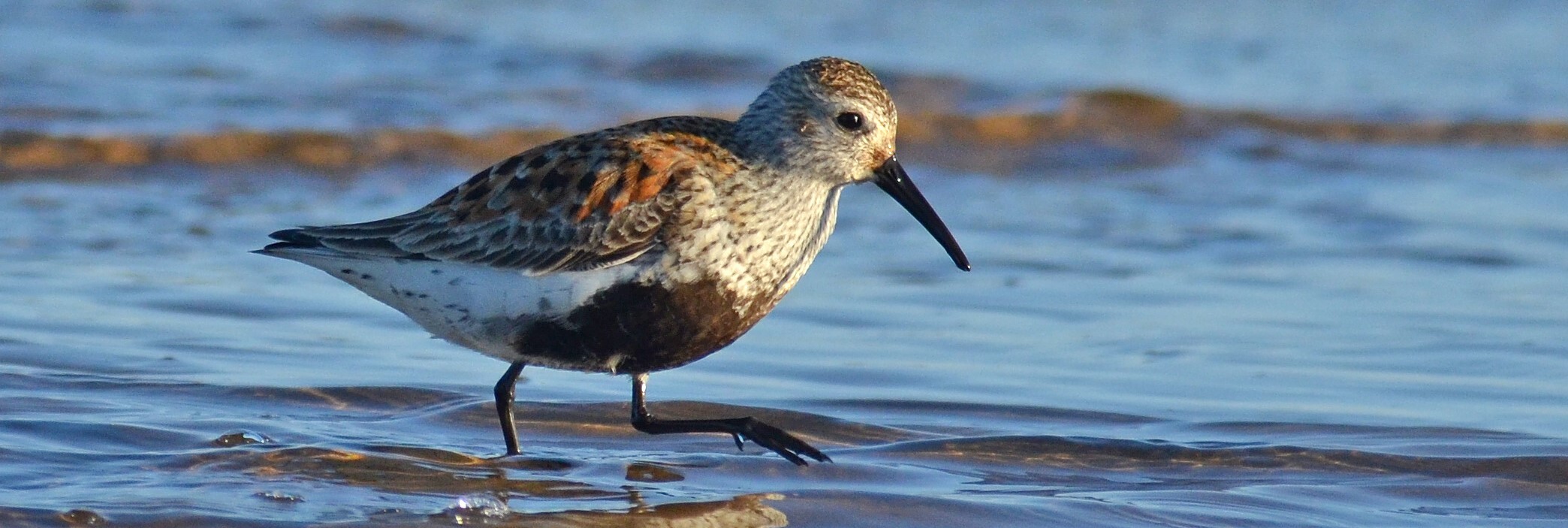
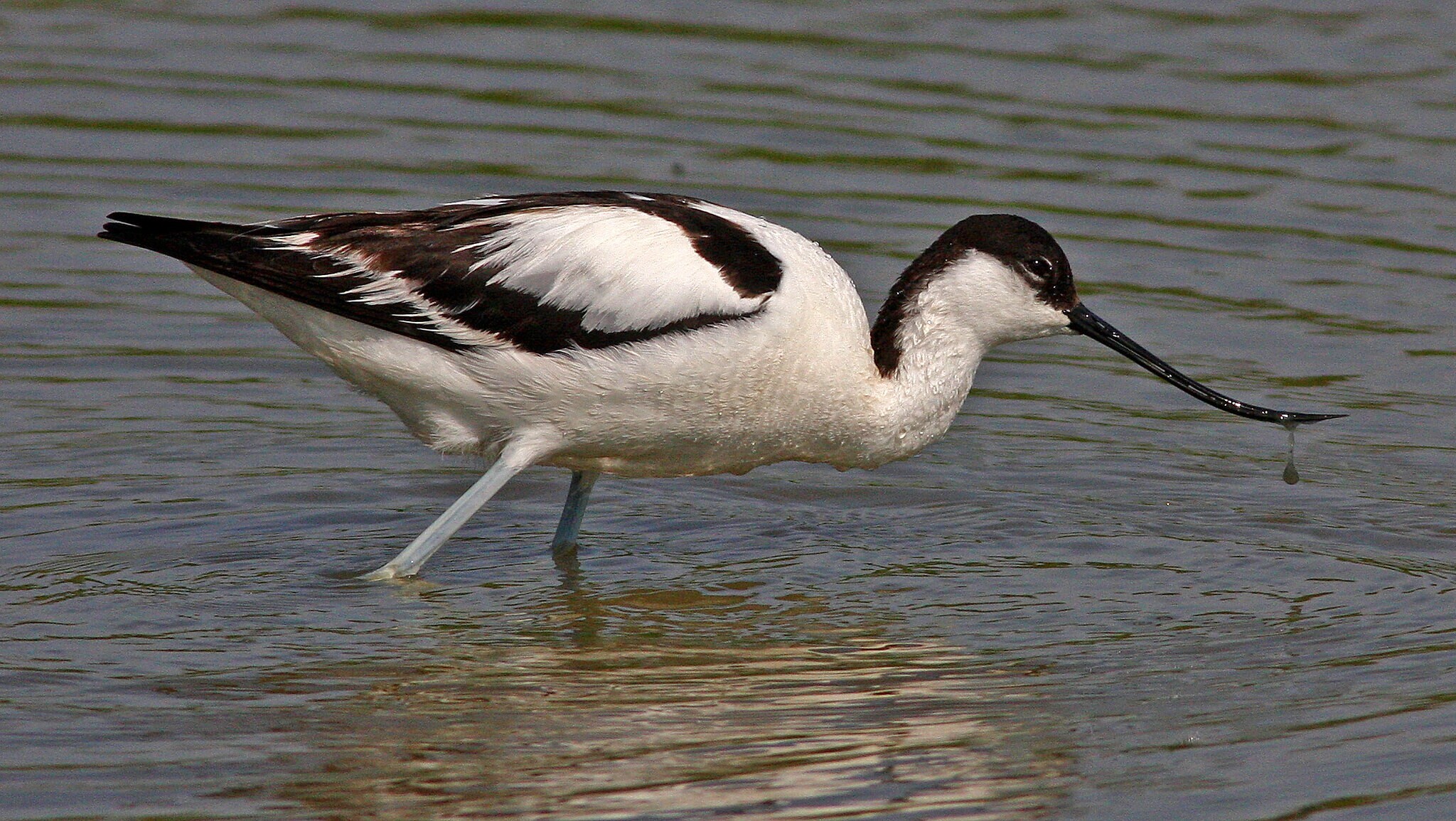
During the wintering season, the estuary concentrates considerably more than 20,000 waterfowl, the minimum required to be awarded the status of a wetland of international value. In fact, during the passing season, the estuary is home to more than 120,000 birds, of which the Pied Avocet (Recurvirostra avosetta) stand out, making a real concentration, as more than 20 per cent of the western European population can be found here.
At EU level, the estuary also includes a vast area classified as a Special Protection Area (SPA). This classification arises from the implementation of European legislation Directive 2009/147/EC on the conservation of wild birds, commonly referred to as the ‘Birds Directive’. This same geographical area virtually matches the area defined under Council Directive 92/43/EEC of 21 May, known as the ‘Habitats Directive’, which aims to preserve biodiversity by preserving natural habitats and wild fauna and flora in the territory of the European Union, particularly through the creation of a network of sites of Community interest, known as Special Areas of Conservation (SAC).
As such, the Tagus Estuary SPA and SAC are part of the Natura 2000 Network, a vast network of ecological areas in the European Union. A small part of the Tagus Estuary SPA is located in the municipality of Moita, roughly corresponding to Quinta do Esteiro Furado, in Sarilhos Pequenos.
The Tagus Estuary is also classified under an international treaty called the ‘Convention on Wetlands of International Importance, especially as Waterfowl Habitat’, known as the Ramsar Convention, which Portugal joined in 1980.
-
Variations in salinity, different sediment grain sizes, and periods of emersion are physical factors that require living organisms to have a high capacity for adaptation and integration of such changes.
In the riparian wetlands of salt marshes and mudflats, where tides and salinity levels are key factors, there is a predominance of plant species adapted to salt, called halophytes. Salt marshes are among the most valuable ecosystems in the biosphere, due to their high oxygen production, carbon retention, nutrient recycling, pollution reduction, and their role as habitats supporting various food chains, including fish, some of which have commercial value.
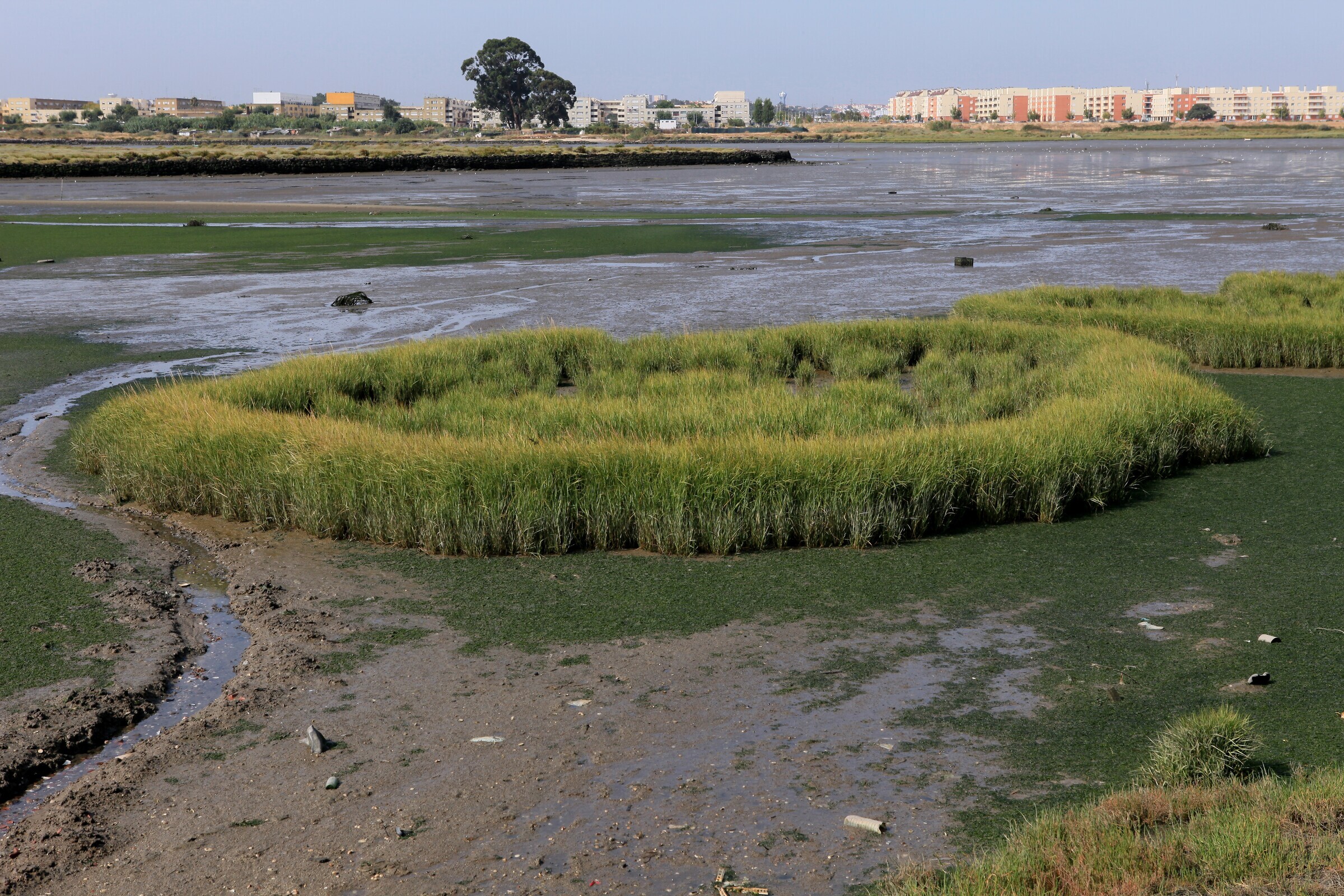
Salt marsh – an area with cordgrass (Spartina maritima)
-
Natural habitats flooded by the tide form ecosystems that capture large amounts of carbon, which can help mitigate climate change. Carbon dioxide is stored in the biomass and muddy soils. The carbon "sequestered" or retained by marine and estuarine ecosystems is therefore called "Blue Carbon."
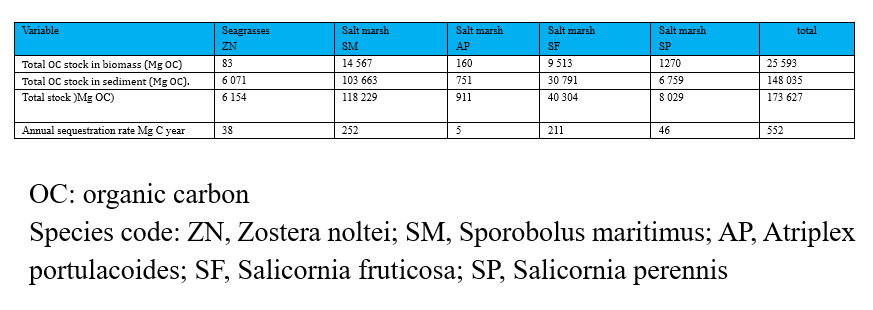
Estimates of blue carbon storage and sequestration in the Tagus Estuary
Despite their important role, estuarine marshes in Portugal are at risk of disappearing, mainly due to the effects of climate change, among other pressure factors.
Seagrasses are also an important blue carbon ecosystem. These flower-producing plants form dense meadows in shallow, protected coastal areas They offer a range of benefits: they work as nurseries and food sources for a wide variety of marine species; they provide shelter for many fish and other animals; they protect coastlines by absorbing wave energy; they produce oxygen and clean the ocean by absorbing polluting nutrients from human land activity. What's more, and despite occupying just 0.2 per cent of the seabed, seagrasses account for 10 per cent of the ocean's capacity to store atmospheric carbon and do so far more efficiently than tropical forests.
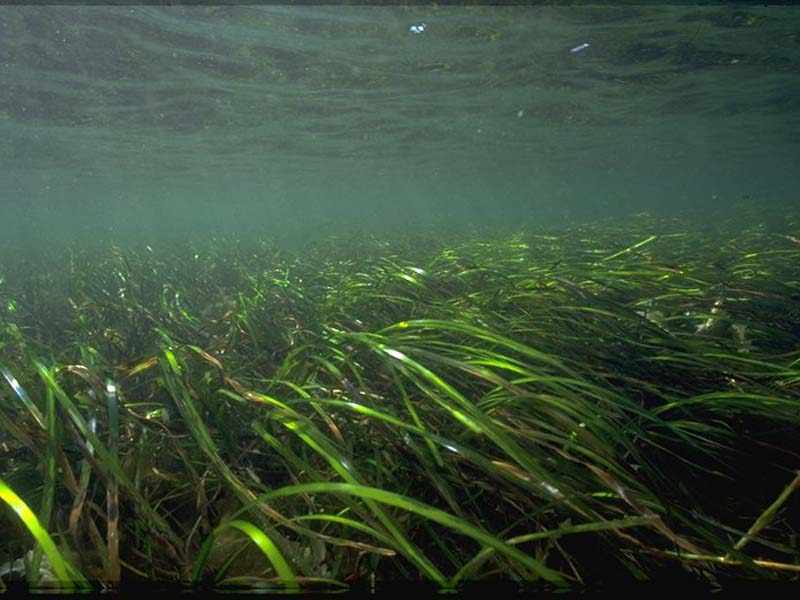
Seagrass meadow (Zostera sp)
-
In Portugal, the most extensive seagrass meadows are found in the Ria Formosa, Ria de Aveiro, and the estuaries of the Sado, Tagus, and Mondego rivers. In the Tagus, the meadows consist exclusively of the species Zostera noltei and are primarily located in the intertidal zone of Samouco. An interesting fish that frequently appears in seagrass meadows is the seahorse, which is also present in the Tagus.
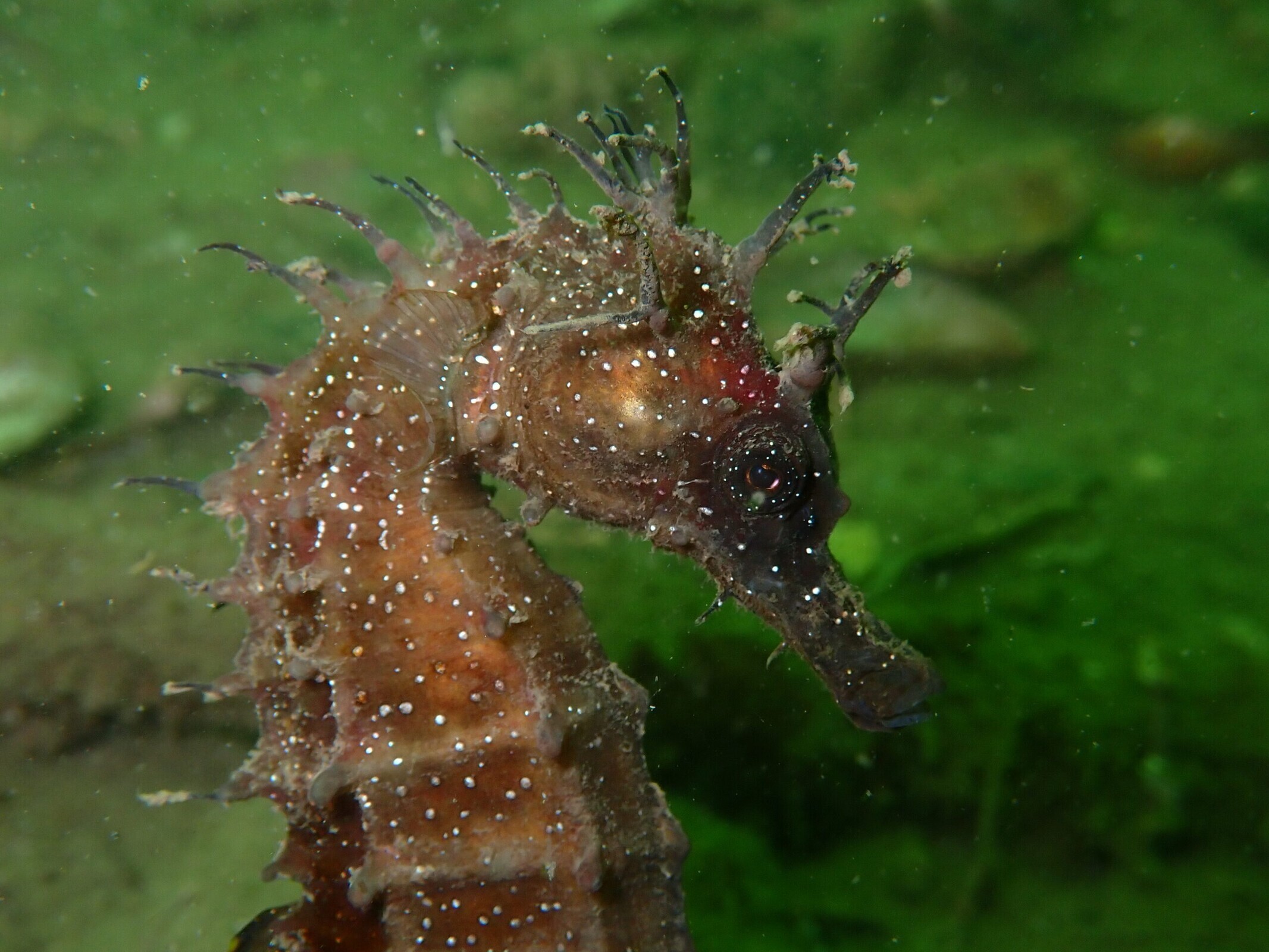
Long-snouted seahorse (Hippocampus guttulatus), found in the seagrass meadow at Trafaria (Almada), alongside the common seahorse (Hippocampus hippocampus) and the pipefish (Syngnathus acus).
The species Zostera noltei is potentially present in the Moita municipality area but is under significant pressure due to frequent trampling by shellfish collectors, who tread on new shoots and uproot the roots with their activities. Currently, very little, if any, of this habitat remains, which was previously found in the area in front of Rosário. In Portugal, Z. nolteiis assessed as "Near Threatened."
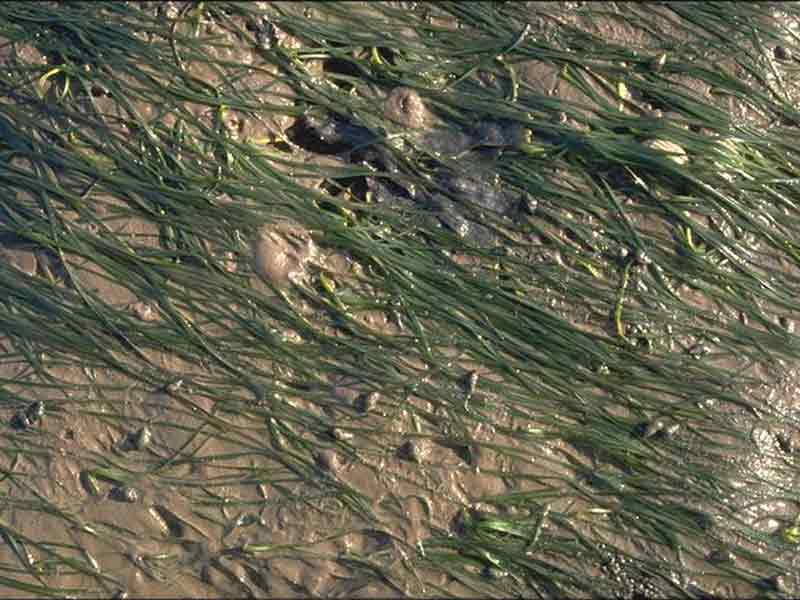
Appearance of Zostera noltei at low tide
Learn More: FCG_CarbonoAzul_Relatorio-II_Web.pdf (gulbenkian.pt)
-
In the Tagus Estuary, the fish community varies with the seasons, and few fishes are permanent residents. Thus, fish species can be classified as residents, species that use the estuary as a nursery, migratory, and occasional.
Resident species are adapted to the strong fluctuations in salinity and temperature, as well as the currents. For example, the blenny (Halobatrachus didactylus) lays relatively large eggs on the bottoms, adhering to any type of substrate, whether stones, oyster shells, tiles, etc. Other common resident species include the bogue or anchovy, the seabass or croaker, the scad, seahorses, and pipefish.
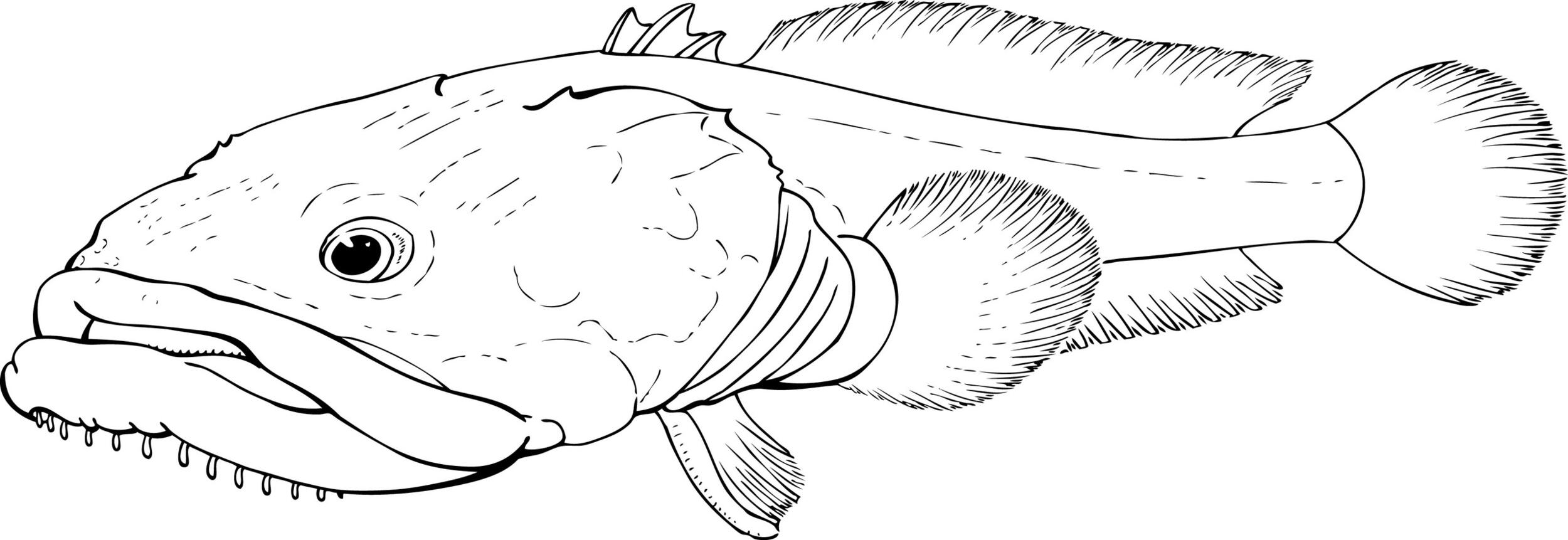
Lusitanian toadfish (Halobatrachus didactylus) – Illustration by Telma Costa
The species that use the estuary as a nursery reproduce at sea, but here the juveniles have plenty of food, fewer predators and good temperature conditions. They remain in the estuary for a variable period and then return to the sea. Examples include seabass, sardines, redfish, pouting, sole and seabream.
Migrators include anadromous and catadromous species. Anadromous species live in sea waters, but migrate to estuaries because they lay their eggs in fresh water; this is the case with shad, twait shad and lamprey. Catadromous species live in estuaries and freshwater, but reproduce in the sea; the best known are eels, mullets and thinlip mullets.
The larger ponds in the salt pans that gathered water directly from the estuary were referred to as "nurseries," and this is where fishes were frequently grown for human consumption. They are still used in some aquaculture activities today, mostly for seabass and seabream.
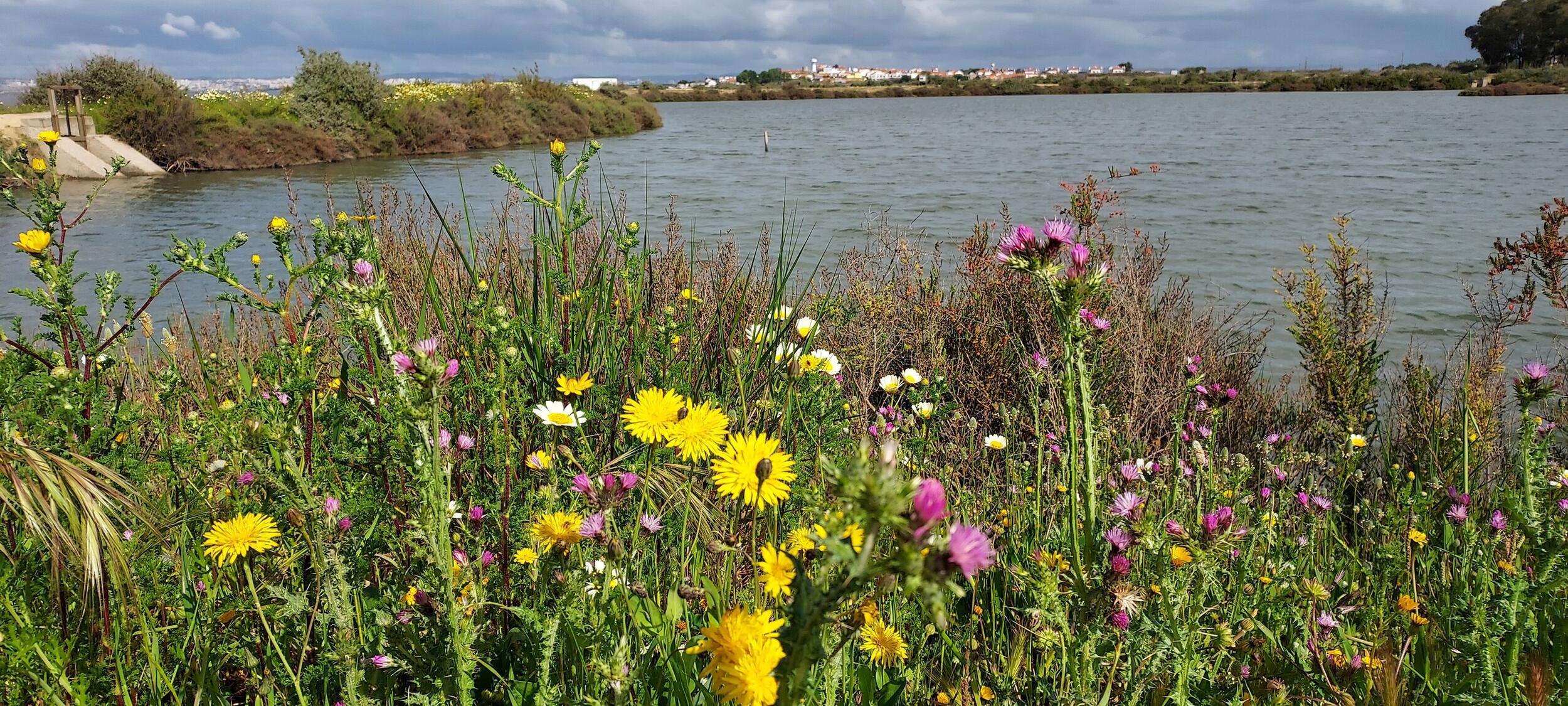
View of the larger reservoir or “nursery”
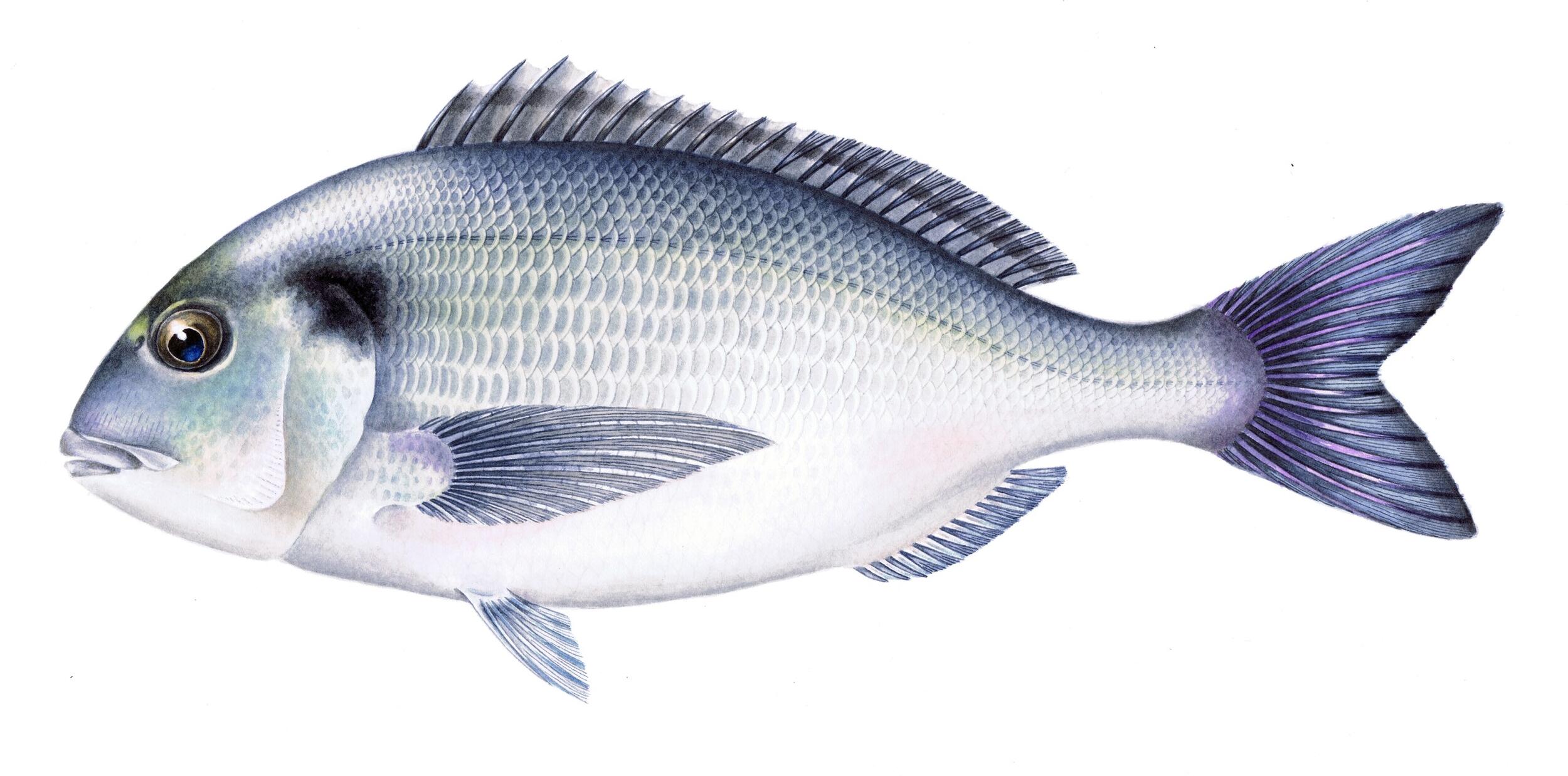 Seabream (Sparus aurata) – Illustration by Telma Costa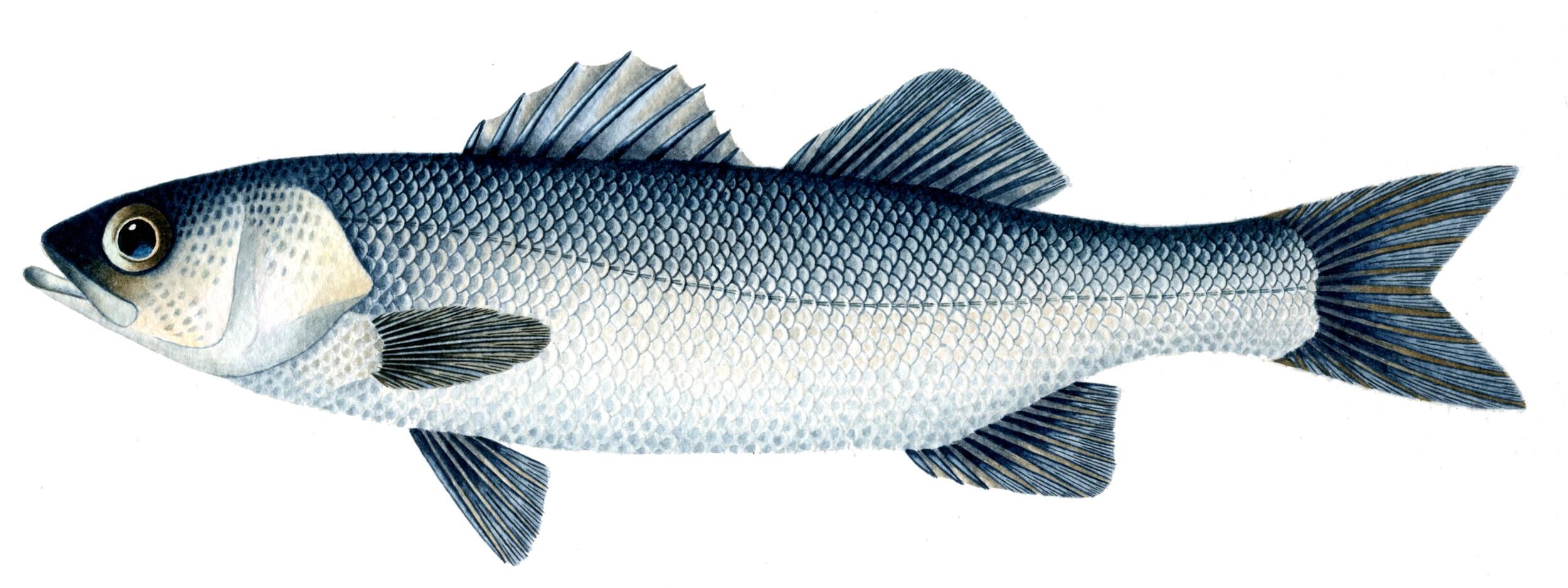
Seabass (Dicentrarchus labrax) – Illustration by Telma Costa