


Salt Extraction
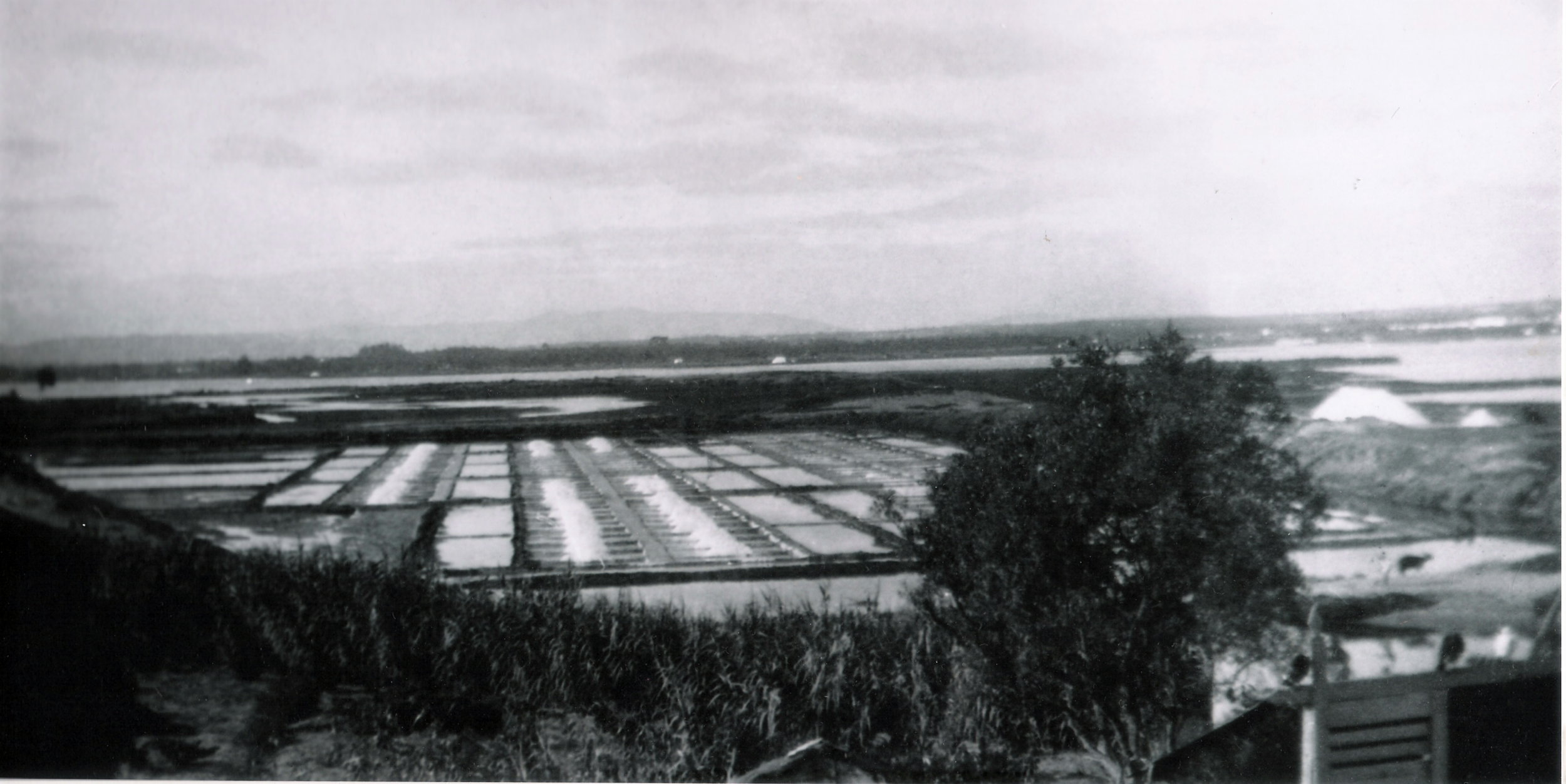
Salt pans (“marinhas”) are systems of ponds built near the sea or on the estuary banks, served by a network of channels, which use the salty tidal water to produce salt (sodium chloride) through evaporation by the action of heat and air currents. Moita's salt pans have generally used the header system in the layout of the compartments, at least since the end of the 15th century.
According to the 1812 'Memória Sobre as Marinhas de Portugal', the salt pans of Moita and Alhos Vedros have five types of ponds: nurseries, cauldrons, boilers, headers, and "talhos". These ponds develop in sequence and have a slope, allowing water to flow naturally through the channels via gravity. The production of salt in the crystallisers requires managing the composition of the water fthat flows into the different ponds.
From the cauldron to the crystallizers, the compartments measure progressively smaller areas, while the evaporation surface increasing. Pond after pond, the water undergoes an evaporation process whereas the salinity of the solution increases, until the concentration allows for the formation of salt crystals.
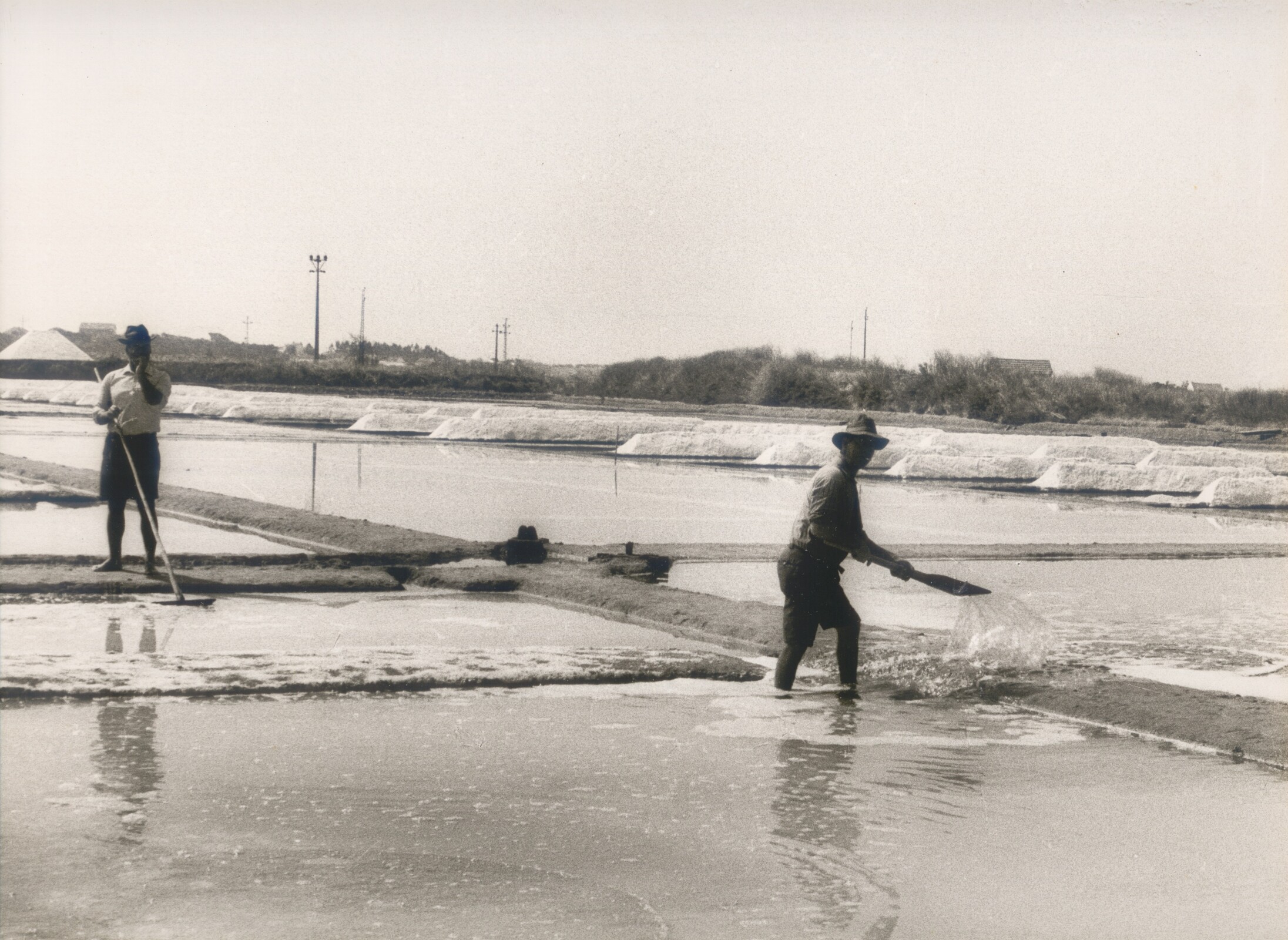
Climatic conditions are essential for salt crystallization, as water evaporates more quickly in hot and windy weather, which is why the salt harvest starts in spring and ends in summer. At the end of April, salt workers begin to prepare the ponds, which were flooded with salt water during the winter, to avoid the desalting effects of fresh water from the rain. The salt pans are dried out, cleaned of accumulated mud and sand, the walls are rebuilt and the channels are cleared.
The ponds are then treated by compacting the clay bottoms in order to harden them and make them impermeable to fresh water infiltration, as well as to prevent particles or sands from being released when salt is removed, which would contaminate it. After completing the necessary preparations, the nursery pond's open water entrance is used to transfer river water—which is the saltiest—into the salt pans during the highest tides.
The nursery pond is the largest and highest-elevation compartment; its height, close to the water intake, should correspond to the height of the estuary's half tide. The water then flows into cauldrons and boilers (evaporation surfaces), where it evaporates while various bodies of solution, silt, and other detritus settle to the bottom, increasing its salinity.
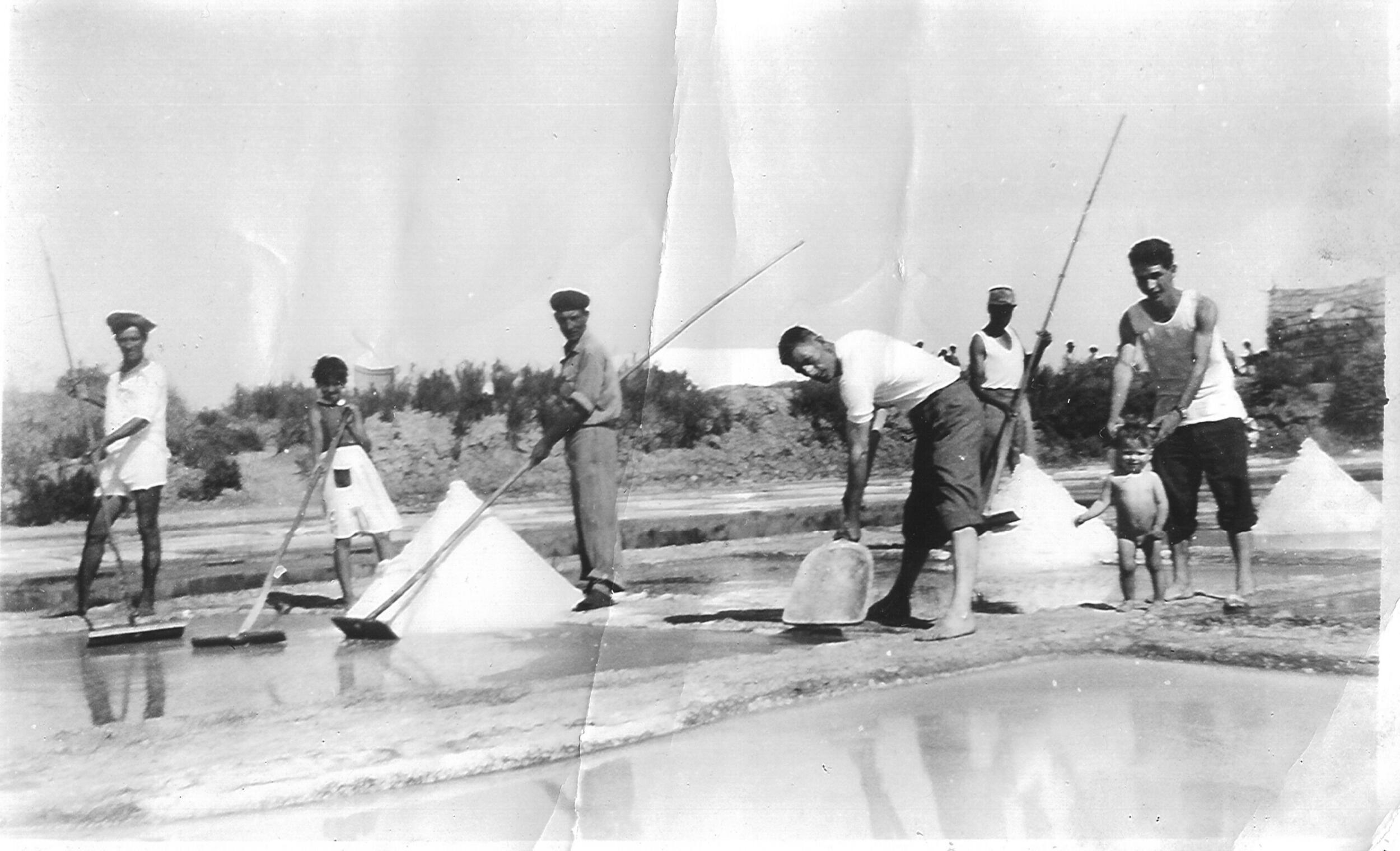
When salt crystals form on the edges of the boiler, the salt worker (marnoteiro) measures the water's salinity using a weigher and a scale expressed in degrees Baumé to control the change of the solution to the headers and the "talhos" precisely when it reaches 25º Baumé. In the "talhos," where the water is 10 cm high, salt crystals start to form on the water's surface. The weight of the crystals and the agitation caused by the wind precipitate them to the bottom. By stirring up the water, the salt workers are able to push the salt into the centre of the ponds.
Now is the time for harvesting, for pulling the salt into the middle tray, a task that requires great manual skill to ensure salt’s purity, to keep it clear from sand, and to prevent cracking the hull or damaging the pond bottom. The raking is carried out by the salt worker, using a long-handled squeegee to avoid walking into the crystallizers, in a careful back-and-forth movement, pulling the salt onto the “barachas” (the earthen slopes separating the compartments of the salt pans and along which the workers walk). After being stacked into a top form, the salt is left to drain on the "barachas" until it is filled into barrels using two wooden planks, removed, and kept on the threshing floor.
On the salt threshing floor, a salt mound is built, covered with rushes and fastened with clay nails, to better preserve the salt and protect it from dust and rain. The salt is also stored in the warehouses or wooden huts, which are also used to store the tools. Once the work is done, the salt pans are flooded and kept until the next salt harvest.